Turning industrial side streams into valuable raw materials

We bring the process to where materials are generated or collected. InnoWe Group develops modular processes that recover valuable materials from industrial side streams and put them back into production.

Tell us about your material
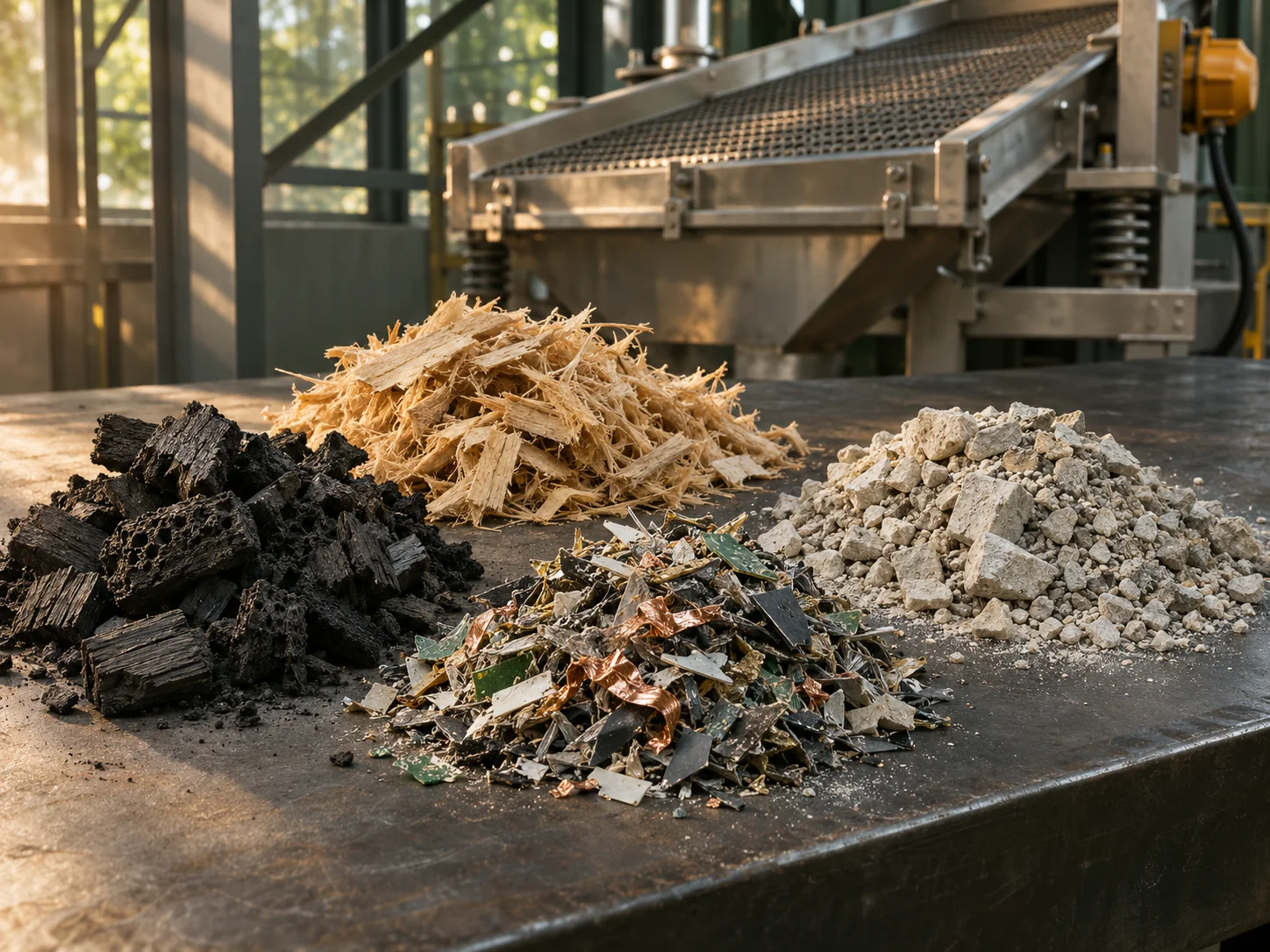
Char, shredded metal-bearing material, fibres and mineral granules on a workbench.

Process modules close to the material source

We select process modules to suit the material. Where the site allows, processing can take place at a production facility or collection point. This can reduce the need to transport untreated material.

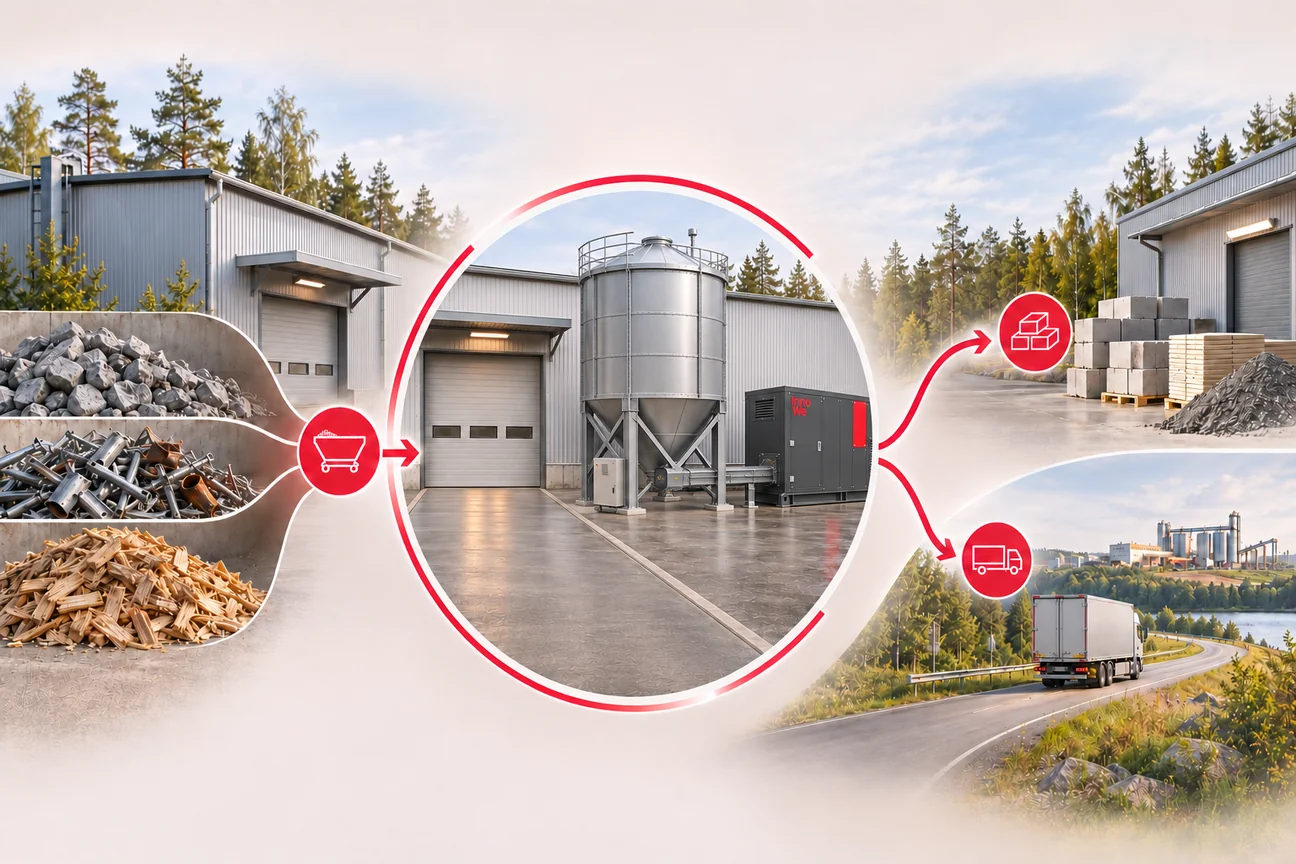
A tall feed silo and a process module beside a clear loading lane. Red arrows show routes to local use and onward transport.
Concept illustration of local processing. An enclosed feeder carries material from the silo to the module. Processed fractions are used nearby or shipped to customers.
  1. Assessment

    We review the origin, composition and volume of the side stream and define the quality requirements for the intended raw material.

  2. Pilot testing

    We test the selected processing method, measure product quality and yield, and assess the economics of the process.

  3. Production design

    We use the results to select and size the required stages, such as pretreatment, separation or refining. The design accounts for site conditions and allows for a future increase in capacity where feasible.

How does local processing change transport needs?

This example assumes 1,000 tonnes of side streams a year and a payload of 25 tonnes per load.

Ship the entire side stream off-site
1,000 t40 loads/year
Process at the source
400 t16 loads/year

24 fewer long-distance loads a year

In the local scenario, 600 tonnes a year are used on-site or nearby. The calculation covers outbound long-distance transport.

Materials and applications

The right processing method depends on the properties of the material and the requirements of its next user.

Meeting targets takes action

Global extraction of natural resources tripled over five decades. The years 2015 to 2025 were the warmest 11 years on record.

We want to make the world cleaner. We put valuable materials back into circulation so they can replace virgin, non-renewable raw materials wherever recycled feedstocks meet the requirements of the application.

EU targets are shaping industry

The European Climate Law sets a binding target to reduce net greenhouse gas emissions by 90% by 2040 compared with 1990 levels. The EU Critical Raw Materials Act sets a 2030 benchmark for recycling capacity equivalent to at least 25% of the EU’s annual consumption of strategic raw materials.

Removing carbon dioxide from the atmosphere

Plants absorb carbon dioxide from the atmosphere as they grow. Converting biomass into biochar can store some of that carbon for a long time. Demonstrating net removal requires assessing the duration of storage and emissions across the process chain.

Permanent carbon removal complements emissions reductions. The EU’s voluntary certification framework includes a methodology for biochar carbon removal.

What could your side stream become?

Tell us where the material comes from, roughly how much you have and any applications you have in mind. We can discuss what to assess first.